
Meta 'Muse' Triggers CPU Rebound... Market Caps of Intel and AMD Surge in a Single Day
The emergence of AI agent services is shifting the semiconductor market focus from GPUs to CPUs.
With the emergence of AI agent services, forecasts are appearing that the center of gravity in the semiconductor market will shift from GPUs to CPUs. As Meta's recently released AI agent service 'Muse' spreads rapidly in the market, the corporate values of related CPU manufacturers have soared.
The Launch of Meta 'Muse' and the Surge in Market Caps of CPU-related Companies
According to the content of a video from the YouTube channel 'Neogul Economy', the market caps of three recent CPU manufacturers increased by 210.6 billion dollars (approximately 286 trillion won) in a single day. Specifically, Intel recorded a stock price increase of 12.14% in one day, ARM rose by 17%, and AMD rose by 9.9%. This change is linked to the success of the AI agent service 'Muse' introduced by Meta on September 8. Muse recorded 902,000 downloads just six days after its release, and as of September 21, it ranked number one in both the App Store and Google Play among free apps, surpassing the download numbers of ChatGPT, Claude, and Gemini.
The Era of AI Agents: Division of Roles Between 'Calculating' GPUs and 'Acting' CPUs
The video explains that the roles of GPUs and CPUs change according to the stage of AI technology development. In the existing chatbot era, the core was the 'calculation' function of providing answers to questions, so the role of the GPU was dominant. While GPUs are specialized in processing many calculations simultaneously, they are unable to perform external activities such as accessing the internet or executing programs on their own. On the other hand, the CPU is responsible for the overall operation of the computer, such as executing programs, accessing the internet, and saving files, performing the role of 'acting'.
The AI agent 'Muse' performs direct tasks on behalf of the user, such as making restaurant reservations or drafting emails according to user commands. In this process, if the GPU is responsible for logical judgment and calculation, the CPU performs the practical role of 'hands and feet' by opening browsers, accessing websites, and performing logins and button clicks. In other words, as the frequency of errands and actions that the agent must perform increases, the demand for CPUs increases accordingly.
Individual Virtual Machine Allocation Method and Server CPU Demand Outlook
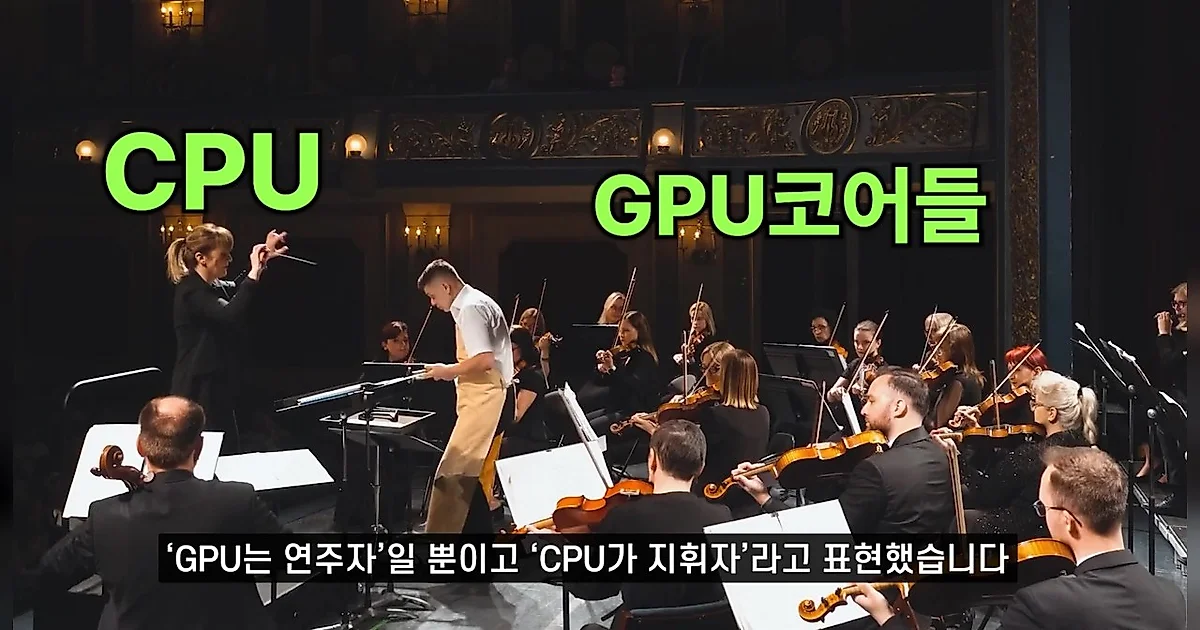
According to Meta's official explanation, Muse runs on its 'own dedicated computer' within the cloud and maintains a state isolated from other agents. This is a method of assigning one independent Virtual Machine per user. The video explains this using the metaphor that 'the GPU is the performer and the CPU is the conductor,' analyzing that in the agent era, as much as increasing the number of performers (GPU), more conductors (CPU) will be needed to control and coordinate them.
Citing analyses from Wall Street investors, the video predicts that agent-type AI will rely heavily on computing-based applications. In particular, it was analyzed that as AI agents are widely distributed to consumers, the demand for server CPUs will increase, and Intel and AMD, the major suppliers in this market, will benefit from it.


0Comments
Comments are currently disabled.