
iPhone 18 Pro AI response speed twice as fast... The core of A20 Pro design
Analysis shows that Apple's next-generation iPhone 18 Pro features a design optimized for On-device AI…
Analysis has emerged that Apple's next-generation smartphone, the iPhone 18 Pro, features a design optimized for an On-device AI environment. Beyond simply increasing computational speed, it appears to focus on resolving data bottlenecks that occur during AI tasks and managing heat to secure sustained performance.
CPU performance significantly improved compared to predecessor... Approaching MacBook Pro performance
According to a video from the YouTube channel 'Unreal Engineering - IT Tech New Technology', the A20 Pro chipset installed in the iPhone 18 Pro showed a noticeable performance improvement compared to its predecessor, the iPhone 17 Pro. According to Geekbench 6 measurement results, the single-core performance of the A20 Pro rose by approximately 24% compared to the predecessor, and multi-core performance rose by approximately 28%. Based on Geekbench 7, it recorded a performance improvement of 28% in single-core and 33% in multi-core.
Particularly in the case of multi-core performance, it is evaluated to have expanded the limits of mobile processors by entering a range similar to the Geekbench 7 multi-core score of the M3 chip installed in the 2023 MacBook Pro. Meanwhile, when compared to the Snapdragon 8 Elite Extreme Gen 6, the next-generation chipset revealed by Qualcomm, the single-core score of the iPhone 18 Pro was found to be approximately 12% higher.
AI response speed increases 2x... Harmony between memory bandwidth and Neural Accelerator
The core change of this generation is AI computational efficiency. Through tests utilizing the Gemma 4 24B mobile version in the video, it was confirmed that the iPhone 18 Pro is more than twice as fast at generating AI responses than the iPhone 17 Pro. This signifies that the performance of On-device AI, which calculates directly inside the device without going through a server, has advanced dramatically.
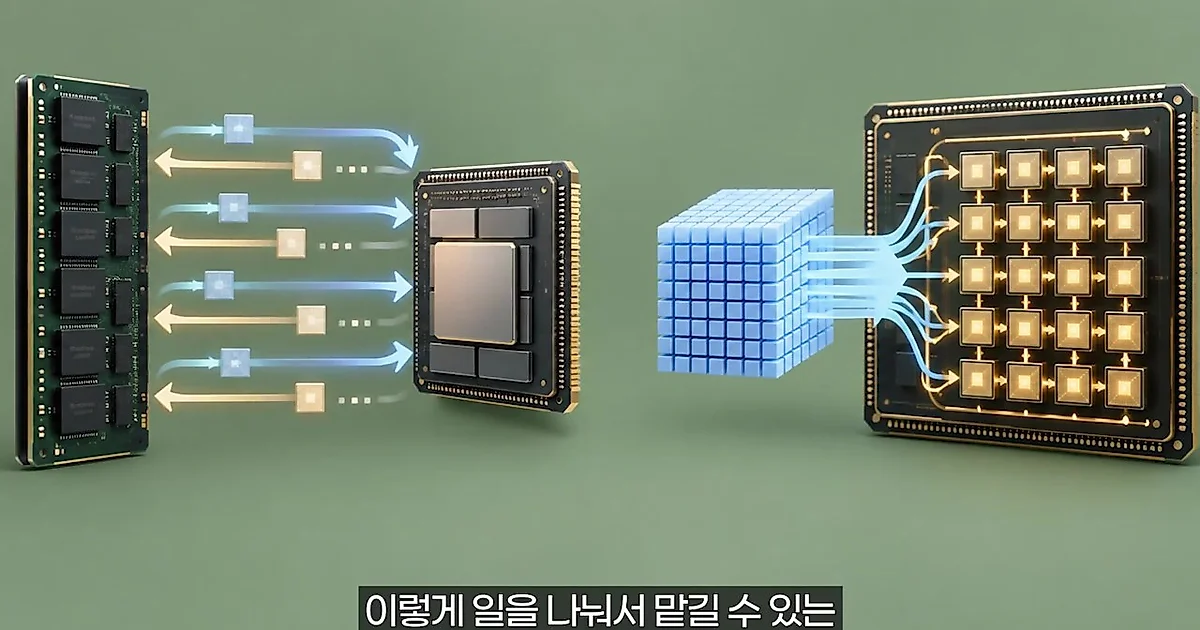
This speed improvement is due to the multifaceted design of the chipset. The A20 Pro is equipped with a 'Neural Accelerator' inside the CPU, optimizing paths so that large calculations can be processed integrally while small calculations can be processed immediately where needed. Additionally, according to Apple's explanation, the memory bandwidth has increased by 50% compared to the predecessor. This plays a role in reducing the bottleneck that occurs when computing devices wait for data by supplying the vast amount of data required when the AI generates responses in a timely manner.
Implementing 'Sustainable AI Performance' with 2nm process and Vapor Chamber
In continuous AI tasks, such as high-load tasks like continuously generating 20 images through image generation AI, heat management is key to maintaining performance. The video conducted tests through an image generation app and pointed out the changes in the cooling structure introduced by Apple for this purpose.
The A20 Pro is designed to place the computing chip and memory side-by-side, allowing the heating chip to directly touch the 'Vapor Chamber', which is the cooling device. Apple explained that they increased this cooling area by three times compared to the predecessor, thereby increasing sustained performance by up to 40%. Furthermore, by applying the Nanosheet structure of the 2nm process to precisely control electric current, they reduced power consumption and minimized heat generation. As a result, the A20 Pro completed a design responding to the era of On-device AI through three pillars: maximizing computational performance, data supply, and heat control.



0Comments
Comments are currently disabled.