
"National Pension is not trying to steal your livelihood"... Chairman Kim Seong-ju reveals reasons for participating in retirement pensions
National Pension Service Chairman Kim Seong-ju explained that the NPS's potential entry into the retirement pension market is aimed at building a model…
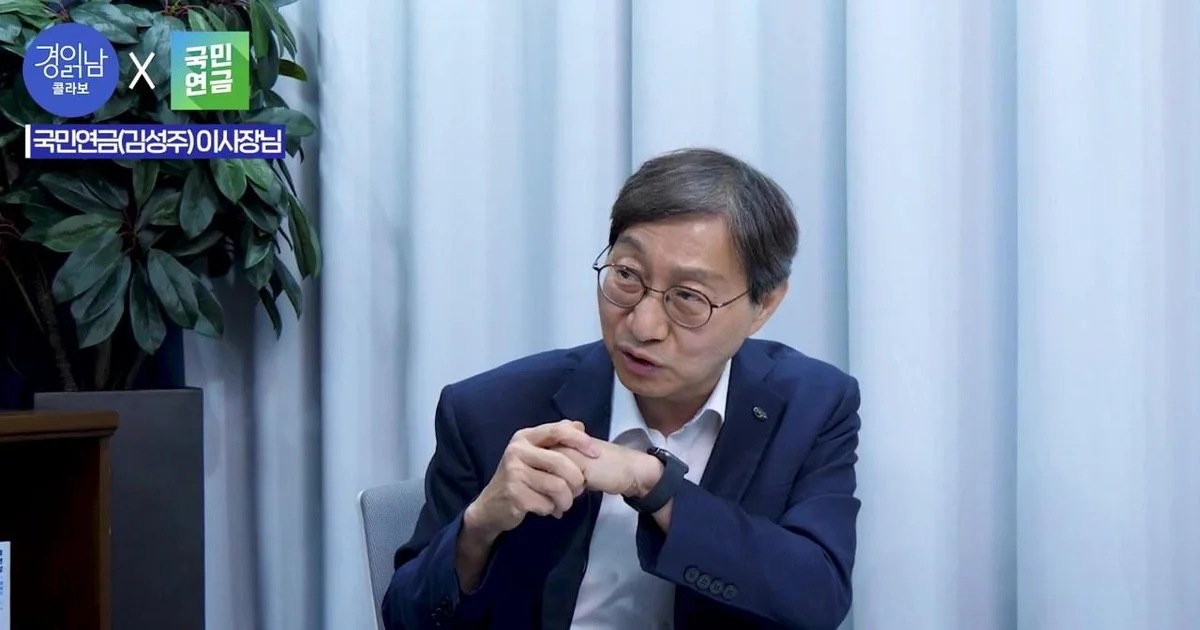
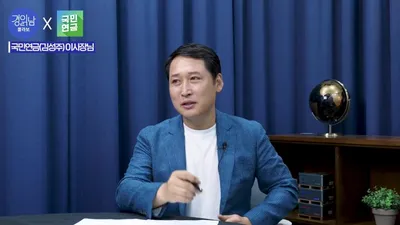
The National Pension Service (NPS) has signaled the possibility of entering the retirement pension market, stating that its purpose is "model building" for old-age income security rather than competing with the private financial sector. Kim Seong-ju, Chairman of the NPS, appeared on the 'Man Who Reads the Economy (Kim Kwang-seok TV)' video to explain his views on participating in the retirement pension business and measures to solve the problem of elderly poverty.
"Old-age income insufficient with National Pension alone; the key is the 'annuitization' of retirement pensions"
Chairman Kim Seong-ju cited the "immaturity of the pension system" as the reason why South Korea's elderly poverty rate is the highest in the OECD 1. While the poverty rate is decreasing as the National Pension matures, the analysis suggests it is difficult to maintain a sufficient standard of living in old age with only the National Pension benefits.
Kim explained, "The level of old-age income that the National Pension can guarantee is on average around 700,000 won," adding, "Of course, there are more than 100,000 people receiving over 2 million won, but that is a small number compared to the 7.6 million total recipients." He pointed out that there are limits to supplementing this deficit by increasing National Pension premiums or raising the income replacement rate.
As an alternative, Kim emphasized that retirement pensions, which are currently paid out in lump sums and end as a large sum of money, must be converted into "real pensions." He stated, "If the National Pension guarantees 1 million won and the retirement pension guarantees 500,000 won, a total old-age income of 1.5 million won is secured," and "The goal is to make retirement pensions function as an annuity rather than a lump sum." He mentioned that he has consistently argued since his time in the National Assembly 10 years ago that retirement pensions must be made to function as annuities.
"Not stealing the livelihood of private financial sectors... acting as a guide to improve returns and fees"
Regarding the concerns felt by existing operators such as banks, insurance companies, and securities firms about the NPS's entry into the retirement pension market, he drew a line, saying, "We are not an institution that pursues profit." Kim argued that even if the NPS participates in the retirement pension business, there is no reason to compete with existing private financial companies and steal their profits.
He pointed to "low returns and high fees" as the current problems in the retirement pension market. Kim criticized, "I believe the reason retirement pensions have recorded low returns and high fees so far is due to the operators, not the system," and "I cannot understand why private financial institutions are reluctant to engage in free competition." He added, "If the NPS participates and creates an initial model, private financial institutions can simply follow that path."
Kim made it clear that the NPS will play a "guide role" by providing direction based on the experience, manpower, and portfolio accumulated while managing a massive fund. He explained, "Since the NPS is a public institution, it can set low fees, and there is no need to feel anxious that customers will be lost if the return results are good," and "Rather, from the perspective of private companies, they may enjoy cost-reduction effects as the NPS collects and operates the retirement pensions."
"South Korea's status has risen... must coexist with the goal of entering the global market"
Pointing to global models such as Australia's 'Superannuation,' Kim suggested that the retirement pension market should move away from wasteful competition within the domestic market. He emphasized, "The retirement pension market should show a pioneering appearance by entering the global market along with the National Pension," and "Instead of competing only domestically, we must go to the global market."
Meanwhile, regarding the criticism that the accessibility for overseas investors is low because the NPS headquarters is located in Jeonju, he responded based on South Korea's elevated status. Kim said, "Because South Korea has the money, people who want to manage it are lining up," and "We do not need to go to New York or London to say, 'Please manage our money for us' in order to receive funds."
He mentioned cases where meetings are held in Jeonju when meeting global IB (investment bank) CEOs or asset management CEOs, saying, "Even if it is not near the capital or an airport, those who want to trade with the NPS will sufficiently come looking for us." He also cited the case of Omaha in the United States, questioning, "Even in a city with a population of about 400,000, an investor conference is held once a year and tens of thousands of people gather; why can't South Korea attract overseas investors?" He dismissed concerns about the Jeonju headquarters location, saying, "South Korea's status has risen to the point where the President of South Korea invites AI company CEOs, and we are in an era where everyone meets if the NPS asks to meet."
Finally, Kim stated, "Whether to participate in the retirement pension business is a matter for the National Assembly to decide by law," and expressed his intention, saying, "If the National Assembly opens the way, we will actively participate to advance the capital market and prepare a second means of income security."
0Comments
Comments are currently disabled.