
Anti-dumping investigations reach record high of 368 cases... Need to reorganize import restrictions from an economic security perspective
As import restrictions surge globally to protect national interests, a study suggests that South Korea must reorganize its import restriction system from the perspective of economic security.
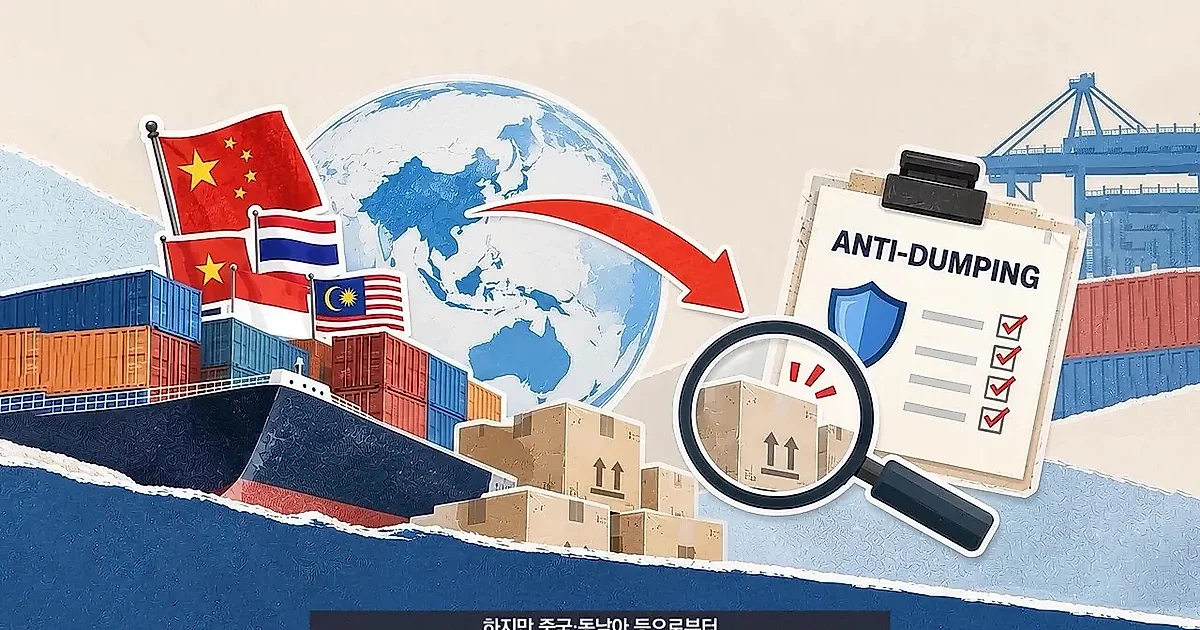
As import restriction measures surge worldwide to protect national interests, a suggestion has been made that South Korea's import restriction system must be reorganized from the perspective of economic security.
According to 'A Study on Institutional Improvements in Response to the Spread of Tariff Policies Related to Import Restrictions' released by the Korea Institute of Public Finance, the total number of anti-dumping tariff investigations implemented globally in 2024 reached 368 cases. This is the largest scale since the establishment of the WTO in 1995. This result reflects the trend of actively utilizing import restrictions as a means of trade sanctions as the global trade environment faces complex crisis situations such as health risks, wars, export controls on core resources, and competition for technological hegemony.
Major countries including United States, EU, and Japan strengthen regulations by prioritizing national security
Major countries are strengthening import restriction tools in different ways. In addition to WTO norms, the United States is implementing powerful tariff measures under the pretext of national security by utilizing Section 232 of the Trade Determination Act, the Trade Act Section 301, and the IEEPA. In particular, the United States operates these systems as core means of trade sanctions.
The EU, while based on WTO norms, has increased its responsiveness by introducing 'ACI', an active trade remedy system to respond to economic coercion, in 2023. Japan was also conservative regarding import restrictions in the past, but has been increasing anti-dumping duties against China since the mid-2010s. In particular, in 2022, it established a legal foundation to enable import restrictions through government-initiated investigations by enacting the Economic Security Promotion Act.
South Korea's system: Challenges in responding to 'circumvention dumping' and supplementing the concept of 'national security'
South Korea has shown a relatively passive attitude toward import restriction measures, being the second most frequent recipient of anti-dumping duties after China. However, as dumping exports and circumvention dumping from China and Southeast Asia have recently increased, it is a time when active policy utilization is necessary for protecting domestic industries and for economic security.
The study pointed out that the role of the Ministry of Finance and Economy must be enhanced to manage potential side effects that may occur if the imposition of anti-dumping duties increases in the future. The analysis suggests that not only the damage to domestic production companies but also the conditions of companies using the relevant goods as intermediate goods, domestic prices and market structures, and trade cooperation must be comprehensively considered.
There are also strong voices calling for the supplementation of the legal system. It is pointed out that the current Foreign Trade Act does not sufficiently prescribe procedures such as gathering opinions from stakeholders, deliberation, or appeals when implementing trade restriction measures. In particular, it was also cited as a limitation that industrial activities related to military supplies or responses to international crises, which are the core of the 'national security exception' stipulated in GATT Article 21, are not clearly reflected in the laws.
Accordingly, the study suggested the need to reorganize core terms related to national security and to establish a pan-governmental decision-making system to increase the objectivity of the judging entities and procedures. As the global trade order is shifting toward economic policies centered on national security, the explanation is that strengthening the legal and institutional foundation reflecting the new concept of national security is urgent.
Source: original video (YouTube)

0Comments
Comments are currently disabled.