
AI Investment Gap Widening... Companies with Over 1,000 Employees Invest an Average of 4 Billion Won
A significant gap in AI investment is emerging between large and small companies, with large enterprises investing 20 times more than small businesses. The analysis suggests that job security in the AI era will depend more on the "standardization of tasks" rather than professional skill levels.
While companies show high interest in artificial intelligence (AI) technology, a clear gap based on company size is appearing in the actual stages of investment and utilization. In particular, an analysis has revealed that the key to future job changes depends on "how standardized a task is" rather than the skill level of the job.
AI Investment Gap by Company Size... Large Companies Invest 20 Times More Than SMEs
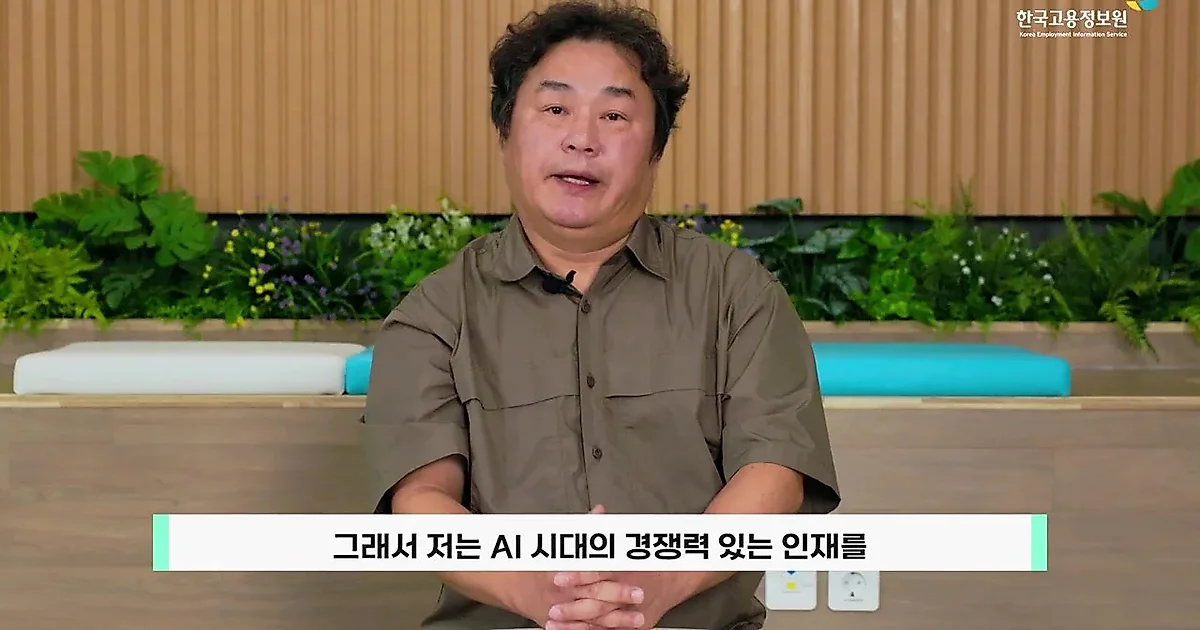
According to a video from the Korea Employment Information Service (feat. Work24), a survey of 2,297 businesses in 21 major domestic industries found that 78.1% of companies were aware of AI-related products or services. However, only 9.4% of companies responded that they are actually investing in AI technology. This means that while companies recognize the necessity of AI, they remain at the "starting line" stage, having not yet entered the full-scale practical application stage.
The problem is the difference in investment capacity depending on company size. For companies with fewer than 100 employees, the proportion of AI investment was 8.6%, with an average investment of approximately 220 million won. In contrast, for companies with 1,000 or more employees, the investment proportion reached 23.5%, and the average investment was recorded at approximately 4.09 billion won. The video warned that this difference in investment capacity could lead to a cumulative gap in future AI utilization capabilities, productivity, and ultimately, corporate competitiveness.
'Thinking Technology' AI... Even Professionals Face Employment Crises in Standardized Tasks
AI technology is distinguished from existing "automation." While automation is a technology that performs repetitive tasks according to set rules, AI is a technology that learns patterns through data and finds new answers. According to the survey, among companies utilizing or developing AI, the response for using generative AI was the highest at 75.6%, and this figure soared to 83.5% in business occupations. This shows that AI is expanding beyond simple repetition into the realms of human judgment and knowledge.
These changes also create differences in employment outlooks by occupation. Looking at the employment outlook scores for 2040, "standardized tasks" that allow for rule application, such as tax/accounting or standardized legal review, even if they require high expertise, appeared low at 3.67 points. On the other hand, tasks where human judgment is essential, such as strategic planning, creative R&D, and psychological counseling, maintained relatively high scores. In particular, "unstandardized tasks" that require responding to unexpected situations, such as care services or field maintenance, showed the highest employment retention at 4.35 points.
Ultimately, the criterion that determines job risk in the AI era is "task standardization" rather than job skill level. As AI replaces repetitive and rule-based tasks, it is expected that human judgment and creativity, which add new value based on AI's outputs, will become even more important.
Top Required Competency is 'Problem-Solving Ability'... Companies Prefer Retraining Existing Personnel
The ideal talent required in the AI era is also changing. Companies showed a tendency to prioritize the "retraining" of existing personnel over external recruitment to secure AI talent. The companies that chose retraining as their first priority for securing AI talent were 49.4%, which was higher than new recruitment (28.3%) or external outsourcing (19.2%). This is the result of the judgment that adding AI utilization capabilities to existing personnel with field experience is the most efficient method.
The competencies required for employees also emphasized essential thinking abilities rather than technical proficiency. When surveying the competencies required for all employees, "problem-solving ability (32.8%)" took an overwhelming first place over coding ability. This figure significantly exceeds digital tool utilization ability (20.7%) or data literacy (11%). This is because as AI presents more answers, the human role of defining what the problem is and verifying AI's answers to apply them in the field becomes more important.
The video emphasized that competitiveness in the AI era lies not in competing with AI, but in "role division" where humans leave the tasks AI is good at to the AI and create value by asking new questions.
Source: original video (YouTube)


0Comments
Comments are currently disabled.