
Fed holds rates as Kim Young-ik warns of potential recession
Professor Kim Young-ik analyzes the Fed's decision to freeze interest rates, predicting that a contraction in US consumption could trigger rate cuts and market adjustments next year.
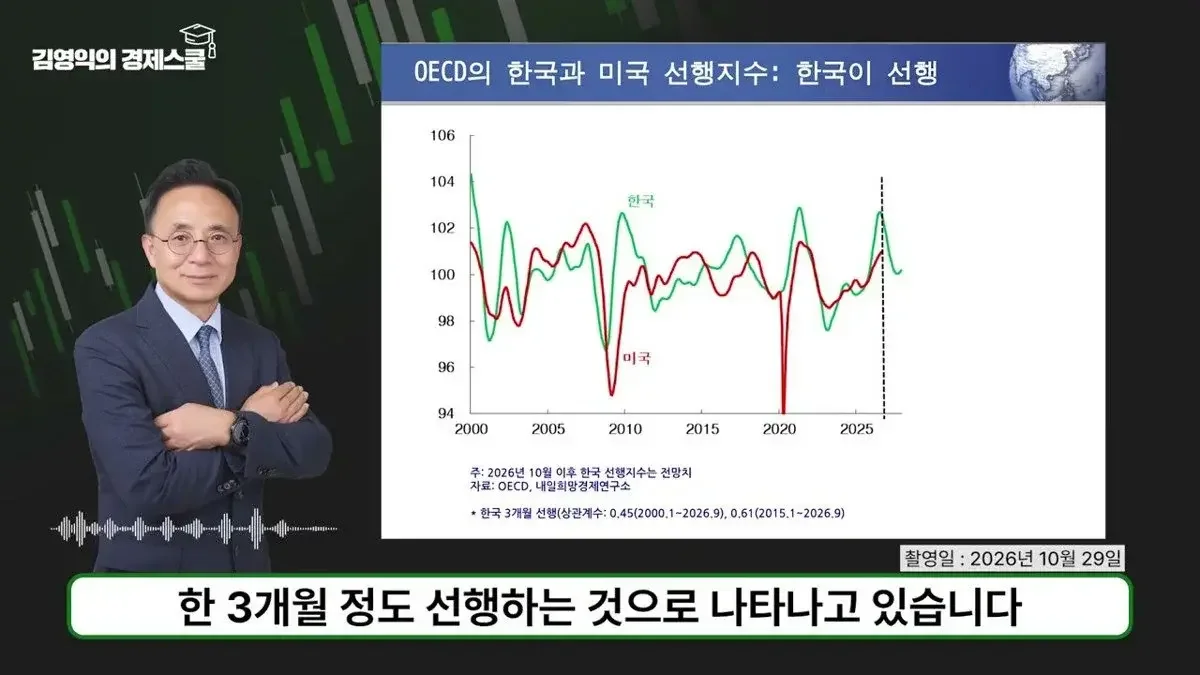
The Federal Reserve froze the benchmark interest rate at 4.0% following an upgrade of US economic activity to "strong," despite non-farm payroll growth falling to 29,000 in September. Professor Kim Young-ik warned that shrinking consumption could lead to interest rate cuts as early as the first half of next year.
The Federal Reserve (Fed) has frozen the benchmark interest rate as market expectations suggested. However, the Fed's view of the United States economy has become even more robust than before, and vigilance regarding inflationary pressures remains. Professor Kim Young-ik analyzed that amidst these Fed movements, the key is to read the turning point of the future interest rate cycle rather than the immediate decision to freeze rates.
High inflation and slowing employment... why the Fed's dilemma deepens
According to the October FOMC results reported by Professor Kim Young-ik, the Fed froze the benchmark interest rate at 4.0% from the previous 3.7%. However, two Fed members showed a hawkish stance, advocating for a 0.25 percentage point increase. The Fed statement included an assessment that economic growth is resilient enough to upgrade the description of US economic activity from "solid" to "strong." Conversely, a diagnosis that inflation remains at a high level was also provided.
Professor Kim noted the imbalance between the Fed's two goals: "price stability" and "full employment." Recently, the US Personal Consumption Expenditures (PCE) inflation rate has been exceeding the 2% target, and the market expects September PCE inflation to have risen by 3.6% compared to the same month last year. On the other hand, employment indicators are showing a noticeable slowdown. Non-farm payroll growth in September was only 29,000, falling significantly below the market expectation of 89,000.
"While there is pressure to raise interest rates because inflation is high, the slowing trend in employment will make the Fed's monetary policy decisions more cautious," Professor Kim analyzed. Although major investment banks (IBs) such as Goldman Sachs and JPMorgan forecast an additional 0.25 percentage point increase in December, Professor Kim suggested that the future trend could change based on shifts in employment and consumption.
"The US economy is close to stagflation"... warning of shrinking consumption
Professor Kim diagnosed the actual perceived state of the US economy as being close to "stagflation" (inflation during an economic recession). This is because, despite the University of Michigan consumer sentiment index falling to historic lows, the one-year expected inflation remains very high at 4.7%. He explained, "Consumer sentiment has worsened, yet expected inflation remains high."
In particular, he warned of a sharp contraction in the consumption sector, which accounts for 69% of the US GDP. His analysis suggests that a combination of low household savings rates, stagnant real income due to rising prices, and increasing interest burdens is at work. "The leading index of the US economy is likely to peak around October and decline from November," Professor Kim predicted. "Next year, as consumption shrinks, the US economic growth rate could fall below the potential growth rate or fall into a recession."
Based on this trend, Professor Kim predicted a shift in the interest rate cycle. Unlike major IBs that expect interest rates to be frozen until next April, he forecasted, "If consumption shrinks next year, the Fed will pivot toward interest rate cuts as early as the first half of next year, or at the latest, the second half."
Possibility of simultaneous decline in dollar, treasury bonds, and stock prices during rate cuts
He also provided specific outlooks regarding the movement of asset markets following changes in interest rates. Professor Kim suggested that in the short term, the dollar index may remain at a higher level than it is currently due to the impact of an additional increase in December, but once interest rate cuts begin next year, the value of the dollar will fall. He also analyzed that treasury bond yields are highly likely to decline next year.
He maintained a cautious stance regarding the stock market. He analyzed that the recent upward trend in US stock prices, despite interest rate hikes, was because corporate earnings and economic growth were stronger than the interest rates. However, he pointed out, "Current US stock prices are in the most overvalued territory in history in light of indicators such as the PER (Price-to-Earnings Ratio) or Tobin's Q."
Professor Kim warned, "If the growth in corporate earnings also slows down when interest rates are cut next year, stock prices may instead undergo a correction." In particular, mentioning the situation where the US 10-year treasury yield exceeds 5% and the credit spread, which has rebounded after hitting a recent low, he added, "Credit risk, which suggests the possibility of an AI bubble or stock price correction, could rise to a significantly high level during next week."
In conclusion, Professor Kim summarized, "The US economy is currently showing strong growth and leaving open the possibility of additional interest rate hikes, but next year, it is highly likely that a contraction in the consumption-centered economy will occur simultaneously with interest rate cuts, a weak dollar, falling treasury bond yields, and stock price corrections."
Source: original video (YouTube)

0Comments
Comments are currently disabled.