
"Records, Not Memories"... 3 Things to Watch Out for When Explaining False Tax Invoices
Companies are increasingly facing demands to submit "Transaction Confirmation Statements" due to the closure of business partners or tax investigations, even when transactions were legitimate. This article outlines the risks of being implicated in a partner's fraudulent tax invoice activity and provides guidance on how to prepare proper documentation.

Even when goods are purchased normally and payments are made, an increasing number of companies are suddenly being required to submit a "Transaction Confirmation Statement" due to the closure of business partners or investigations by tax authorities. This is because if a business partner is revealed to be a "documentary trader" who issued false tax invoices, all businesses that traded with that partner become subjects for explanation.
A partner's mistake becomes your tax problem... "They aren't looking at us"
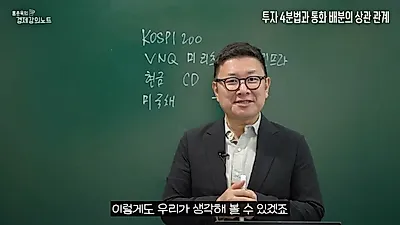
Transaction Confirmation Statements sent by tax offices or regional National Tax Service offices are often not targeting the faults of a company, but are derived from the process of tracking the fraudulent activities of a transaction partner (business partner). According to a video from the YouTube channel 'Semujosa-neun Peonpeontaekseu | Guksecheong Josaguk Chulsin', when a specific business partner is suspected of fraudulent issuance of tax invoices, the tax authorities verify the transaction facts with all businesses that received invoices from that company.
In this process, companies face difficult situations. Even if they conducted legitimate transactions, if the business partner has already closed down, the responsibility to prove the fact that actual goods were exchanged lies with the recipient (buyer). In particular, tax invoices issued just before a business partner closes down are highly likely to be suspected of intentional tax evasion. The video emphasized, "The tax office does not look at the paper invoice itself, but whether the actual goods and money moved correctly behind it."
Penalty tax to increase to 4% from 2026... "Damage is massive for 100 million won transactions"
The economic blow resulting from being determined as a fraudulent transaction is beyond imagination. First, for tax invoices issued or received after January 1, 2026, the penalty tax rate will increase from the current 3% to 4%. This applies to both the issuer and the recipient.
It is not just the penalty tax that increases. If determined to be a false tax invoice, the input tax credit cannot be received, meaning VAT must be paid again, and additional penalties for failure to report and delayed payment will be attached. Furthermore, the amount cannot be recognized as an expense (deductible) when calculating corporate tax or income tax. According to the video, if a single invoice with a supply value of 100 million won is denied, the 10 million won in VAT that was refunded, as well as the increased 4 million won penalty tax, will be added, and the entire 100 million won will be excluded from the calculation of corporate/income tax, leading to a 'tax bomb'.
If confirmed to be through fraudulent methods, the period during which the tax authorities can impose taxes is up to 10 years. Additionally, the legal basis has recently been strengthened to allow tax office heads to request lease agreements to confirm business substance or conduct on-site visits to check whether there is actual office work. Since the issuance of false tax invoices is judged by summing up the entire supply value rather than an annual aggregate, even small amounts can be subject to criminal punishment if repeated.
'Records' should take precedence over 'memories' when writing an explanation
The most important thing to be wary of when responding to the tax authorities' demand for explanation is 'answers relying on memory'. The video presented three types of answers to avoid when writing an explanation. The first is writing uncertain memories, such as "I remember the CEO brought it personally." This is because there is a high risk of being considered a false statement if the date or quantity differs from actual records.
The second is explaining cash transactions. Even if it is an industry practice, it is difficult to be recognized without evidence. The third is answers that blame the business partner just to avoid responsibility for our company. This is because the purpose of the explanation is to prove 'whether our transaction was real', not to attack the other party.
For a proper response, 'objective records of the movement of goods and money', such as bank transfer details, transaction statements, waybill receipts, receiving records, CCTV at the time of goods receipt, and text messages with the person in charge, must be submitted in alignment with the dates. If more time is needed to prepare documents, rather than missing the deadline without notice, the best way to avoid misunderstanding is to contact the officer in charge, inform them of the preparation status, and request an extension of the deadline.

0Comments
Comments are currently disabled.