
The Core of Myeongnyundang's 14.8 Billion Won Fine is 'Unfair Support', Not 'High-Interest Lending'
The 14.8 billion won fine imposed on Myeongnyundang, the operator of Myeongnyun Jinsa Galbi, stems from unfair support provided to money lending companies owned by the owner's family rather than high-interest lending to franchisees. The Korea Fair Trade Commission determined that Myeongnyundang provided funds to these companies at rates significantly lower than market rates.
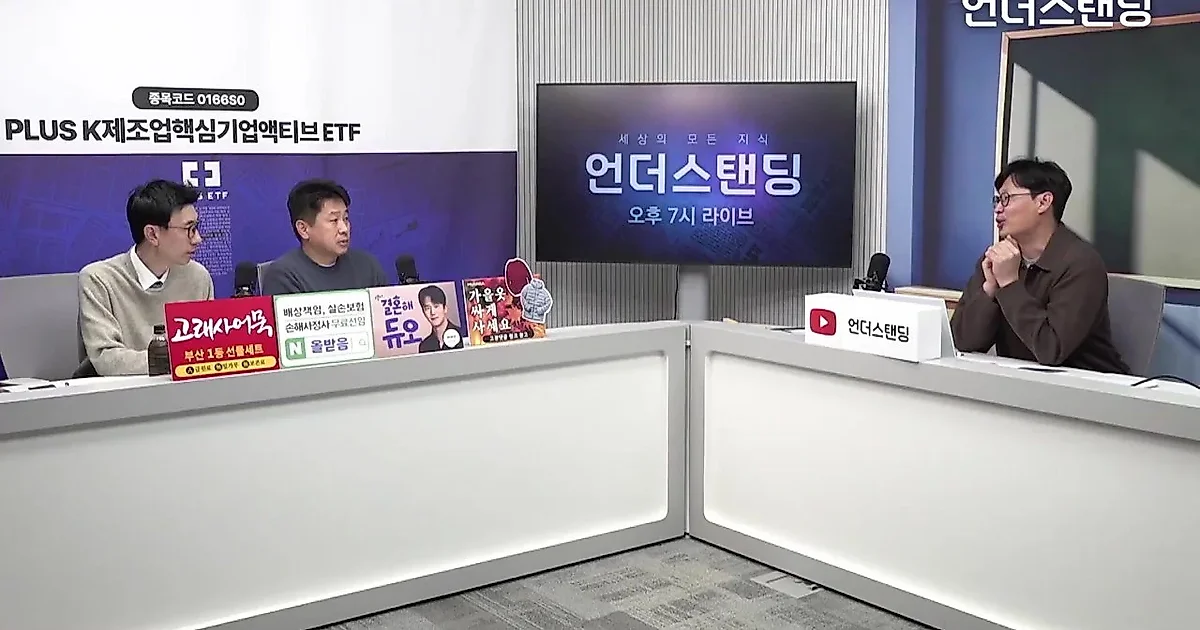
Behind the 14.8 billion won fine imposed on Myeongnyundang, the operator of Myeongnyun Jinsa Galbi, by the Korea Fair Trade Commission, lies the issue of unfair support for money lending companies in which the owner's family holds shares, rather than high-interest lending targeting franchisees. While recent media reports focused on the fact that interest income was generated by applying interest rates close to 12–18% per year to franchisees, the Korea Fair Trade Commission's basis for judgment is different.
Providing funds to the owner's family money lending companies at 2–4% interest, lower than market rates
According to the investigation by the Korea Fair Trade Commission, Myeongnyundang established 14 money lending companies owned by the chairman's family starting from the end of 2021. The Korea Fair Trade Commission judged that Myeongnyundang's act of lending funds to these money lending companies at low interest rates of around 2–4% constituted unfair support. The interest rates these money lending companies could have received if they had raised funds in the market were around 8–13%, but the Korea Fair Trade Commission's view is that Myeongnyundang provided funds to companies owned by the owner's family at rates significantly lower than market rates.
Myeongnyundang is a controlling shareholder system in which the chairman's family holds a 65% stake, and the established money lending companies are also owned by the owner's family with stakes of 75–100%. Although transactions between affiliates with different legal personalities must be normal transactions that conform to market prices, it was pointed out as a problem that a structure was formed where Myeongnyundang's profits were transferred to the money lending companies owned by the owner's family.
A 'low-risk profit structure' built through the goods-repayment method and subrogation agreements
The structural factors that allowed the money lending companies to secure franchisees as customers and minimize loss risks are cited as the 'goods-repayment method' and 'subrogation agreements.' The goods-repayment method is a form where franchisees repay the principal and interest of the money lending company's loan at the same time they receive goods such as raw meat from Myeongnyundang. For example, when receiving raw meat worth 120,000 won, they pay about 160,000 won including the loan amount.
Additionally, by Myeongnyundang entering into subrogation agreements (a promise that Myeongnyundang will pay instead if the franchisee fails to fulfill the debt) with the money lending companies, the money lending companies came to bear almost no risk of default. According to the explanation in the video, the bad debt ratio of these money lending companies has maintained a very low level over the past four years. The Korea Fair Trade Commission views that, in addition to providing funds at low interest rates, Myeongnyundang provided privileges that allowed the money lending companies to easily generate profits through the goods-repayment method and subrogation agreements.
Controversy over the use of Korea Development Bank operating funds to support money lending companies
Regarding the source of funds, controversy has also been raised over whether the operating funds of approximately 70 billion to 80 billion won borrowed by Myeongnyundang from the Korea Development Bank were used to support the money lending companies. This is because the period when Myeongnyundang raised funds at low interest rates from the Korea Development Bank is similar to the period when funds flowed out to the money lending companies. However, analysis suggests that it is difficult to clearly confirm whether there was an actual violation of the intended use of funds.
Myeongnyundang countered that it was a system to help franchisees with startup and renewal costs and has announced a future lawsuit. There is an evaluation that while this may be a defense against the high-interest controversy targeting franchisees pointed out by the media, it is a separate issue from the unfair support issue raised by the Korea Fair Trade Commission.
Source: original video (YouTube)
0Comments
Comments are currently disabled.