
"History Repeats Itself" Kim Young-ik Analyzes the History of Credit Expansion and Contraction through Galbraith's Works
Economics expert Professor Kim Young-ik analyzed modern economic trends through John Kenneth Galbraith's books, "Talking About Money" and "The Age of Uncertainty." He emphasized that while the form of technology changes, the fundamental economic principles of credit expansion and contraction repeat.
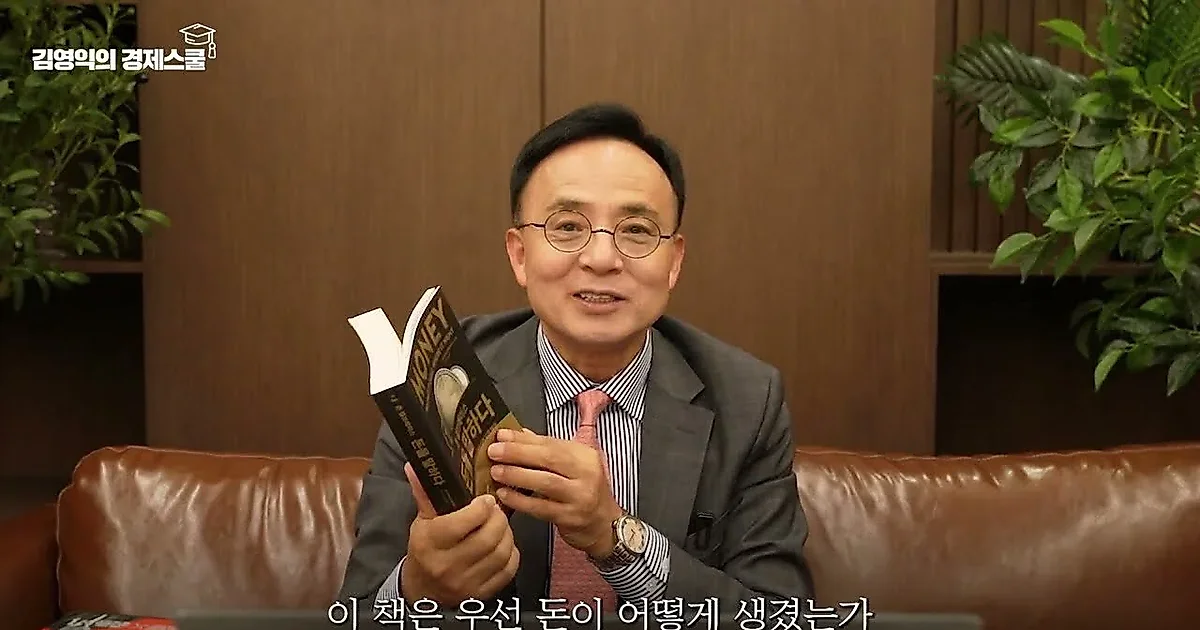
Economics expert Professor Kim Young-ik analyzed the flow of the modern economy through John Kenneth Galbraith's economic works, 『Talking About Money』 and 『The Age of Uncertainty』. In the video, Professor Kim emphasized that although the form of technology changes, the basic economic principles of credit expanding and contracting repeat.
The Credit Cycle Created by Greed and Fear, Lessons from the Great Depression of the 1920s
Citing Galbraith's book 『Talking About Money』, Professor Kim Young-ik explained that the essence of money ultimately lies in 'credit.' From the history where seashells or cigarettes served as currency to the current banknotes and cryptocurrencies, the form of money has changed, but the flow of credit repeats due to human greed and fear. His analysis suggests that when credit expands, human greed is at work, and when credit contracts, fear takes over, leading to bubbles and collapses.
In particular, Professor Kim noted the case of the Great Depression covered in Chapter 14 of Galbraith's book. As productivity increased due to the development of automobile and electrical technologies in the late 1920s, people at the time believed "this time is different" and used excessive credit to purchase stocks. Professor Kim explained that in an unregulated state at that time, excessive credit expansion—such as buying 100 dollars worth of stocks with 10 dollars of assets—created a bubble, which eventually led to the Great Depression of the 1930s. He also mentioned that the crisis was intensified because policy authorities failed to respond actively to monetary policy, instead engaging in policy responses that dealt with insolvent companies in a way that prioritized certain interests.
AI Bubbles and the US-China Hegemony War, Current Uncertainty Greater Than in 1977
Professor Kim diagnosed the current economic situation through Galbraith's other book, 『The Age of Uncertainty』. He analyzed that while the uncertainty in 1977 was the oil shock and stagflation, the current uncertainty is in a more intensified state. He cited the hegemony war between the United States and China as the cause. He explained that unlike in the past when China's share of global GDP was less than 3%, its economic influence has grown through rapid growth, making containment between the two countries inevitable.
Additionally, the recent AI-related stock bubble and AI guidance investment situation were identified as major uncertainty factors. Professor Kim mentioned that upward pressure on interest rates is increasing, as the 10-year US Treasury yield exceeded 5.2%, its highest since March 2020, and analyzed that if interest rates rise, household consumption may decrease and it could become difficult for AI companies to raise funds. He predicted that although it may not be the same situation as the 1929 Great Depression, the stock market may react first, followed by a decrease in consumption and investment next year, potentially leading the United States economy into a recession.
The Direction of Monetary Policy Constrained by Government Debt and Inflation
The difference between the current economic situation and the past was cited as the surge in government debt and the problem of inflation. Professor Kim diagnosed that through the recessions of 2008 and 2020, government debt has surged, centered around advanced nations, and as central banks in each country released massive amounts of money, confidence in the value of money has fallen. In the case of the United States specifically, he pointed out that government debt is exceeding 120% of GDP, and the inflation rate (based on PCE) is exceeding the Federal Reserve's target of 2%.
These figures are factors that make the future response of the Federal Reserve difficult. Professor Kim explained that due to the burden of government debt, it is difficult for the United States government to increase additional spending, and because of the Federal Reserve's goal of price stability, it is also difficult to carry out monetary policy aggressively. He added that since the direction of the economy is likely to follow a path similar to past historical flows, it is important to read market signals through history.
Source: original video (YouTube)


0Comments
Comments are currently disabled.