

Kwak Soo-jong urges youth to adopt business mindset during overseas travel
During a recent visit to Osaka, Japan, Dr. Kwak Soo-jong observed the profound impact of Japan's "Lost 30 Years" and urged South Korean youth to adopt a business-oriented perspective when traveling abroad. He emphasized that the government and corporations must provide practical financial and diplomatic support rather than merely encouraging overseas expansion through words.

Optical Communication Emerges as Key Solution to AI Data Center Bottlenecks
As AI computing demands surge, optical communication technology is replacing copper wiring to resolve data transfer bottlenecks in AI infrastructure. This shift is triggering a strategic competition between China's assembly capabilities and the design and packaging expertise of the United States and Taiwan.

"Even Pizza Shops are Collapsing": Self-Employed Face Bankruptcy Crisis Amid Interest Rate Shock
While South Korea's semiconductor boom masks economic indicators, self-employed individuals and youth are facing a severe recession and deepening "K-shaped" polarization. High interest rates and the structural flaws of franchise systems are driving many small business owners toward bankruptcy.

Anthropic and OpenAI Poised for Massive Valuations as AI Giants Challenge Big Tech
Anthropic could reach a 3,000 trillion won valuation upon IPO, while OpenAI pursues high-value private funding.

"Senate to be held by Republicans, House to be retaken by Democrats"... Will Trump strengthen external pressure?
Professor Min Jeong-hun of the Korea National Diplomatic Academy analyzes the likely outcomes of the upcoming U.S. midterm elections and how they will impact the Trump administration's foreign and trade policies. The analysis suggests that while Republicans may retain the Senate, Democrats are likely to retake the House, potentially leading to a scenario where the administration relies heavily on executive orders to push its agenda.

"Resilience over Cost"... The 'Plan B' Companies Must Prepare in the Era of Supply Chain Risk
Jeong Cheol, president of the Korean Association of International Trade, explains that companies must shift their focus from cost-efficiency to supply chain resilience to navigate increasing trade barriers and geopolitical risks. He suggests strategies such as multi-sourcing, strategic inventory, and traceability to mitigate unpredictable uncertainties.

US Treasury Yields Surpass 5%... Warnings of AI Bubble Burst and Stock Price Correction
Professor Kim Young-ik warns that rising US Treasury yields, which have reached their highest levels since 2002, could trigger a decline in stock prices and a contraction in AI-related investments. He highlights structural imbalances caused by fiscal deficits and a lack of demand for US debt as primary drivers of high interest rates.
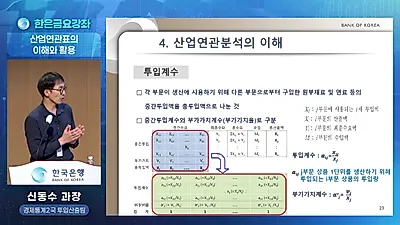
"The ripple effect of tariff policies on employment can be calculated"... The power of Input-Output Tables
Shin Dong-su, head of the Input-Output Team at the Bank of Korea, explained the concept of Input-Output tables and their potential for economic analysis in a lecture video. He highlighted how these tables serve as an "economic map" to calculate the impact of external factors, such as tariff policies, on various industrial sectors and employment.

US inflation surge adds pressure on South Korean stocks as AI leadership shifts
US producer prices rose 1.3% in September from the previous month, exceeding market expectations and adding to uncertainty over interest rates. Professor Kim Kwang-seok said South Korean stocks also face pressure from a shift in AI market leadership, arguing that stocks outside the leading group are not investment candidates.

Experts split on semiconductor stock sales as hyperscaler spending and lead times draw scrutiny
Experts debating Samsung Electronics and SK hynix stocks disagreed over whether investors should cut exposure now or keep buying through the first half of next year. Their arguments centered on liquidity pressures, hyperscaler capital spending, memory prices and semiconductor earnings.

Most People Seeking Debt Adjustment Are Working but Still Struggle to Repay
An analysis of 2023 Credit Counseling and Recovery Service data found that about 92% of people seeking debt adjustment were working, with day laborers making up the largest share and unemployed people accounting for less than 10%. Interviews with 30 financially vulnerable people found different debt patterns by age and pointed to a need for employment, financial, welfare and health services to work together.
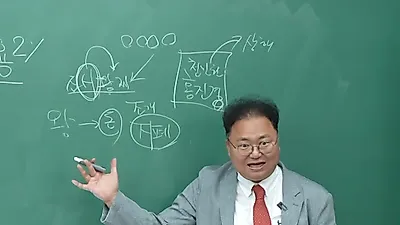
How Dutch herring fishing helped give rise to stocks
On Study King Real Genius Hong Jin-kyung, Choi Go-min-su traced the origins of stocks to investors seeking to limit their responsibility to the amount they invested. He described how herring wealth, the Bank of Amsterdam and trading in Dutch East India Company shares helped lay the foundations for modern stock markets.

South Korea’s Chipmakers Urged to Broaden Partnerships Beyond NVIDIA
A three-way discussion on The Man Who Explains the Economy (Kim Kwang-seok TV) examined how Samsung Electronics, SK hynix and other chipmakers in South Korea could sustain their competitiveness. Participants highlighted HBM prices, shareholder returns and cooperation with companies such as AMD as key considerations.

Gwak Su-jong Urges Larger Bond Holdings as KOSPI Falls Below 5,500
Gwak Su-jong recommended increasing bond allocations as the KOSPI fell below 5,500 and market volatility rose. He cited high United States Treasury yields, the benefits of compounding and potential bond issuance to support AI investment.
US September CPI Rises 3.7%, Surpassing Forecasts in 'Inflation Shock' as Treasury Yields Surpass 5.3%
The US Consumer Price Index (CPI) for September rose 3.7% year-on-year, exceeding market expectations and causing an inflation shock that pushed Treasury yields above 5.3%.

"The 'Bottleneck' Will Determine the 2027 Leading Stocks"... What Comes After Semiconductors?
Experts analyzed the direction of the Korean stock market and future leading sectors in a three-way discussion hosted by the economic channel 'The Man Who Explains the Economy (Kim Kwang-seok TV)'. They identified "bottlenecks" in AI infrastructure and the rise of Physical AI and power infrastructure as key drivers for the upcoming industrial cycles.

92% of Debt Adjustment Recipients are Working... The Reality of the 'Vicious Cycle' Where Debt Cannot Be Repaid Even with Work
A structural issue has been identified where 9 out of 10 people using debt adjustment services are participating in economic activities but cannot escape the cycle of debt. This is due to a "vicious cycle" where unstable employment and the burden of living expenses prevent income from covering debt repayments.

ASML records 4.96 billion euro net profit in Q3... Equipment order inquiries continue until 2030
ASML, the world's largest semiconductor lithography equipment company, announced its third-quarter results, reporting a net profit of 4.96 billion euros. According to reports, equipment order inquiries are extending as far as 2030, supported by continuous demand for semiconductors driven by Big Tech data center construction.
Export Share Rises to 16.1%... Economic Growth Accelerates Led by Semiconductors
South Korea's production scale grew by 4.6% year-on-year to 7,114 trillion won, driven by a surge in semiconductor exports fueled by the AI boom. While the export share of the economy rose to 16.1%, the total number of employed persons saw a slight decrease.

Brazil's Cosmetic Exports Surpass $1 Billion... Shifting Landscape in Latin America's Consumer Goods Market
The consumer goods market in Latin America is undergoing rapid changes, characterized by Brazil's record-breaking cosmetic exports, the rise of the "Sober Curious" culture in Chile, and growing demand for Korean consumer goods in Argentina and Paraguay.

Semiconductor Price Peak Imminent... Is the 'Era of P' Ending and the 'Era of Q' Arriving?
The semiconductor industry is approaching a paradigm shift from price-driven growth (P) to quantity-driven growth (Q). While AI infrastructure investment has transformed demand structures, macroeconomic variables such as interest rates may regulate the pace of this investment.
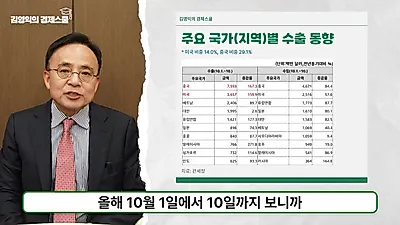
Daily Average Exports Plunge from $5.6 Billion to $4.7 Billion... KOSPI Adjustment Expected to Prolong
An analysis suggests that the recent decline in semiconductor stock prices, which has driven the Korean stock market this year, is preemptively reflecting changes in economic indicators. As data confirms that the export growth trend has begun to slow, the KOSPI is expected to continue its adjustment phase for the time being.

Severe Labor Shortage in Chungcheongbuk-do Semiconductor Companies... Wages 22% Lower Than Seoul Metropolitan Area, Leading to 'Talent Outflow'
The semiconductor industry in Chungcheongbuk-do is facing a severe labor shortage due to a 22% wage gap compared to Gyeonggi Province, causing skilled workers to leave for the metropolitan area. While the "North Chungcheong Semiconductor Industry Power-Up Jobs Project" has successfully created jobs, experts suggest a shift from short-term subsidies to long-term retention packages to address structural issues.

South Korean Stock Market Weak Despite Samsung Electronics' Profits... Diverging 'Profit Stability' from Taiwan's TSMC
The South Korean stock market is struggling due to its excessive concentration on semiconductor companies like Samsung Electronics and SK hynix, which are vulnerable to price fluctuations. In contrast, Taiwan's TSMC maintains higher revenue visibility and profit stability through its foundry business model and strong supply chain position.
Kwak Soo-jong urges youth to adopt business mindset during overseas travel
Optical Communication Emerges as Key Solution to AI Data Center Bottlenecks
"Even Pizza Shops are Collapsing": Self-Employed Face Bankruptcy Crisis Amid Interest Rate Shock
Anthropic and OpenAI Poised for Massive Valuations as AI Giants Challenge Big Tech
"Senate to be held by Republicans, House to be retaken by Democrats"... Will Trump strengthen external pressure?
"Resilience over Cost"... The 'Plan B' Companies Must Prepare in the Era of Supply Chain Risk
US Treasury Yields Surpass 5%... Warnings of AI Bubble Burst and Stock Price Correction
"The ripple effect of tariff policies on employment can be calculated"... The power of Input-Output Tables
US inflation surge adds pressure on South Korean stocks as AI leadership shifts
Experts split on semiconductor stock sales as hyperscaler spending and lead times draw scrutiny
Most People Seeking Debt Adjustment Are Working but Still Struggle to Repay
How Dutch herring fishing helped give rise to stocks
South Korea’s Chipmakers Urged to Broaden Partnerships Beyond NVIDIA
Gwak Su-jong Urges Larger Bond Holdings as KOSPI Falls Below 5,500
US September CPI Rises 3.7%, Surpassing Forecasts in 'Inflation Shock' as Treasury Yields Surpass 5.3%
"The 'Bottleneck' Will Determine the 2027 Leading Stocks"... What Comes After Semiconductors?
92% of Debt Adjustment Recipients are Working... The Reality of the 'Vicious Cycle' Where Debt Cannot Be Repaid Even with Work
ASML records 4.96 billion euro net profit in Q3... Equipment order inquiries continue until 2030
Export Share Rises to 16.1%... Economic Growth Accelerates Led by Semiconductors
Brazil's Cosmetic Exports Surpass $1 Billion... Shifting Landscape in Latin America's Consumer Goods Market
Semiconductor Price Peak Imminent... Is the 'Era of P' Ending and the 'Era of Q' Arriving?
Daily Average Exports Plunge from $5.6 Billion to $4.7 Billion... KOSPI Adjustment Expected to Prolong
Severe Labor Shortage in Chungcheongbuk-do Semiconductor Companies... Wages 22% Lower Than Seoul Metropolitan Area, Leading to 'Talent Outflow'