
China's aggressive pricing threatens South Korean semiconductor market leadership
Despite being behind in technical capabilities, China is rapidly seizing market share through aggressive pricing and a self-sufficient ecosystem driven by Huawei, CXMT, and domestic AI models.
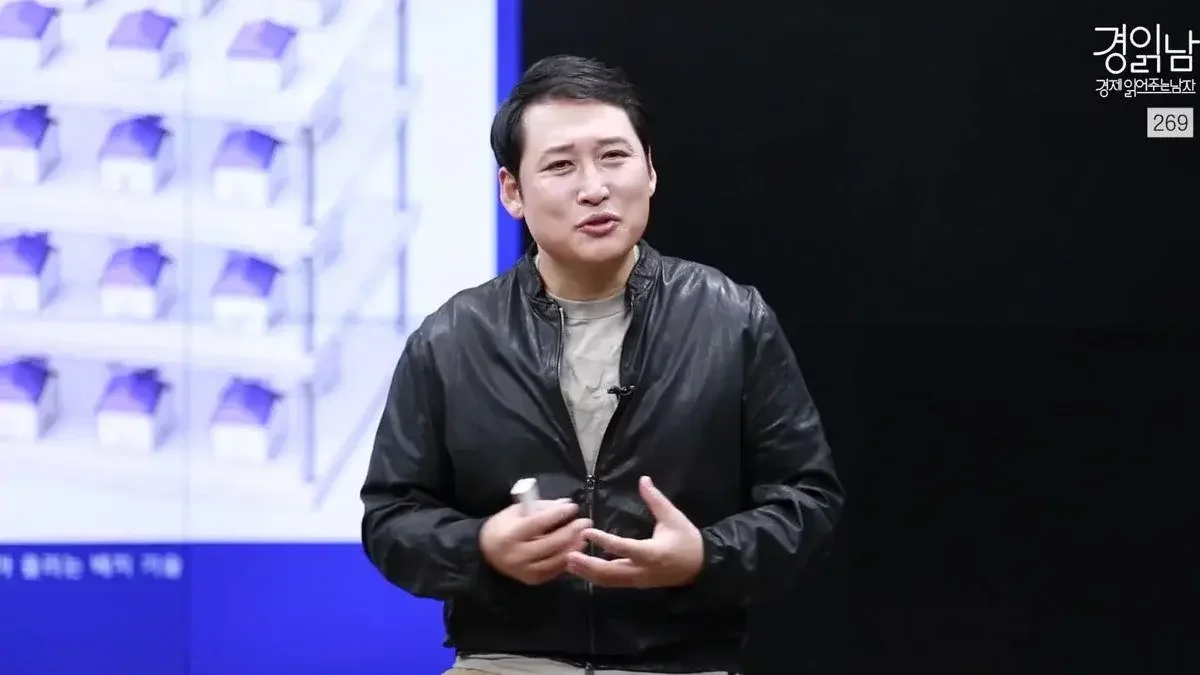
Chinese semiconductor firms are rapidly gaining market share through "super-gap pricing" and technological innovations like Huawei's three-dimensional circuit arrangement. While Samsung Electronics and SK hynix saw their combined market share drop to 63% in the second quarter of this year, CXMT's DRAM market share has surged to approximately 10%.
The Chinese semiconductor industry is rapidly encroaching on the market share of South Korean semiconductor companies by building an independent ecosystem despite heavy US sanctions. Warnings have emerged that even if a technical "super-gap" is maintained, market leadership could be lost to China's offensive led by "super-gap pricing."
According to an analysis by The Man Who Explains the Economy (Kim Kwang-seok TV), China's semiconductor rise is unfolding around three pillars: Huawei's technological innovation, the expanding market share of CXMT, and the rapid proliferation of Chinese AI models. In particular, Huawei has emerged as a threatening presence in the non-memory sector by finding new breakthroughs to bypass US equipment export regulations.
The 'Heo's Law' brought by sanctions: Huawei's time contraction technology
As US sanctions blocked the supply of ASML's extreme ultraviolet (EUV) lithography equipment from the Netherlands, Huawei introduced a new technology that completely reverses existing process methods. Professor Kim named this the "paradox of sanctions" and "Heo's Law." He explained that while traditional semiconductor processes used "geometric contraction" to draw circuits smaller, Huawei has opted for a "time contraction (logic folding)" method that arranges circuits three-dimensionally to reduce signal travel time.
This is similar to building upward like a skyscraper instead of reducing the footprint of a house. It is an attempt to overcome the limitations of lithography equipment through arrangement technology. In an era where ultra-fine processes are essential—where a 1-nanometer chip is equivalent to magnifying a human hair, which is about 100,000 nanometers, 50,000 times—Huawei is building a foundation to independently meet the semiconductor demand required for domestic AI models such as DeepSeek. This is interpreted as a determination to break away from the existing structure of procuring semiconductors from external sources like South Korea and to build a self-sufficient ecosystem.
CXMT's share surges... Samsung Electronics and SK hynix face 'territory grab' crisis
The threat in the memory semiconductor field is even more visible. The market share of the Chinese DRAM manufacturer CXMT, which was less than 0.5% in 2021 and remained between 0.5% and 0.9% until 2023, has recently surged to the 10% level. In contrast, the market shares of Samsung Electronics and SK hynix have been steadily declining, falling from 75% two years ago to 70% one year ago, and to 63% in the second quarter of this year. Even if the performance of these two companies remains solid, the growth of Chinese companies is overwhelming, creating a "territory grab" situation where market share is being lost.
CXMT's revenue growth exceeds 500%, outpacing the growth rates of Samsung Electronics and SK hynix. Even more noteworthy is the change in attitude among global companies. CXMT is completing its independent ecosystem based on support from the Chinese government and strategic supply chains with domestic big tech companies such as Alibaba (which holds approximately a 4% stake) and Tencent. Some diagnoses suggest that even Apple may have no choice but to select CXMT, which can fill the DRAM supply shortage, to avoid falling behind in the AI hegemony war. If CXMT challenges the HBM (High Bandwidth Memory) field alongside its technological advancement, the position of the South Korean semiconductor industry could become even more precarious.
The 'Super-Gap Price' offensive renders technical gaps irrelevant
The momentum of Chinese AI models is also unusual. Chinese AI models, represented by DeepSeek, Kimi, and Yi, are rapidly chasing US models in terms of technical performance. Professor Kim warned that even if technical superiority is maintained, market share may have already shifted to China. The video presented an analysis that from the middle of 2025, the token market share of Chinese AI models surpassed that of the US. Currently, the token market share between the US and China is at a level of 62 to 30, indicating that the US is falling behind.
This is because companies choose "super-gap pricing" to maximize profitability. In an environment where multiple models can be used interchangeably through gateways like OpenRouter, the judgment is spreading that while US models are used for high-end workloads where high performance is essential, it is more economical to use cheap Chinese models for general-purpose tasks. It was pointed out as a core challenge facing the South Korean semiconductor industry that even if a technical super-gap strategy works well, it may kneel before the logic of the market: price competitiveness.
Professor Kim emphasized, "Being complacent and thinking that Chinese semiconductors are not threatening is actually the way to hand over the market," adding, "Only when we fully recognize that China is threatening can we devise countermeasures." He also warned that the complacent thought that they will not be able to catch up with the technical gap could result in "making the rabbit lose a running race to the turtle."
Source: original video (YouTube)


0Comments
Comments are currently disabled.